Zara Schmitz · 21 September 2026
Iriswood's Fungal Networks Reshape Understanding of Forest Regeneration Patterns
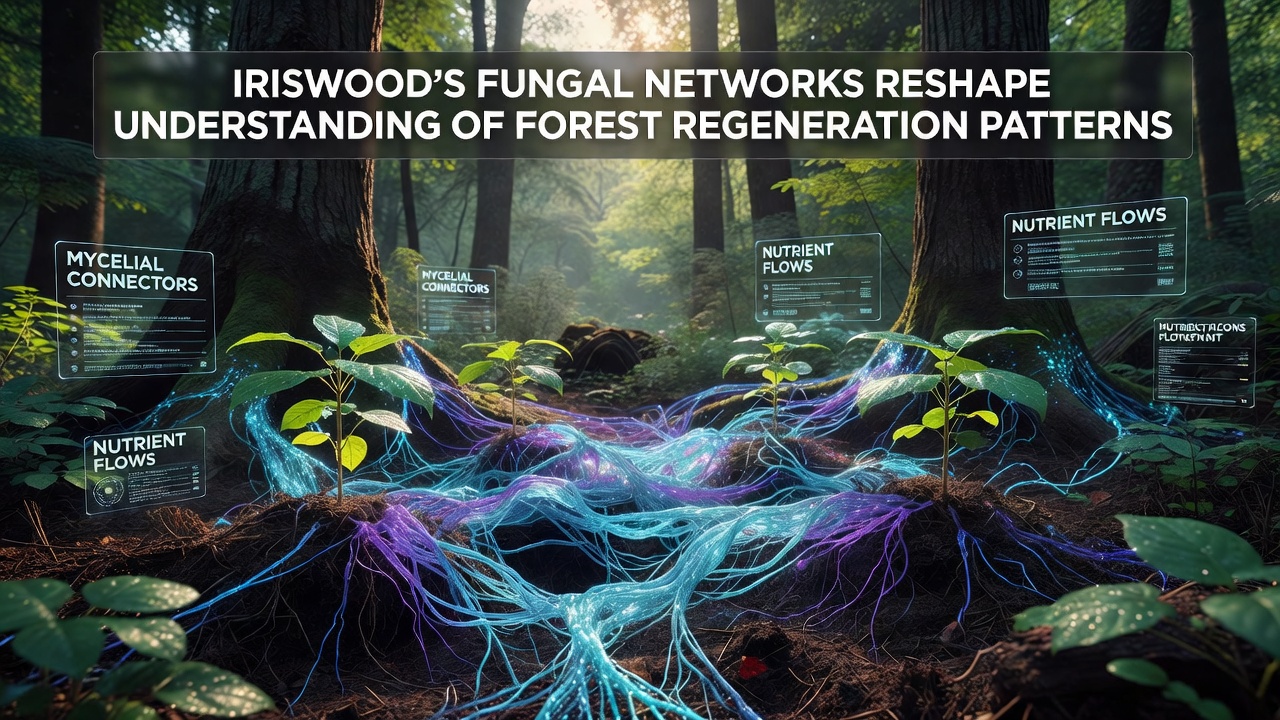
Forest researchers have documented extensive fungal networks beneath Iriswood that link tree roots across wide areas, and these connections appear to influence how seedlings establish themselves after disturbances such as logging or storms. Studies conducted over the past decade show that mycorrhizal fungi form common mycorrhizal networks which transfer water, nutrients, and chemical signals between mature trees and younger growth, altering previous models that treated each tree as an isolated unit competing for resources.
Mapping the Underground Connections
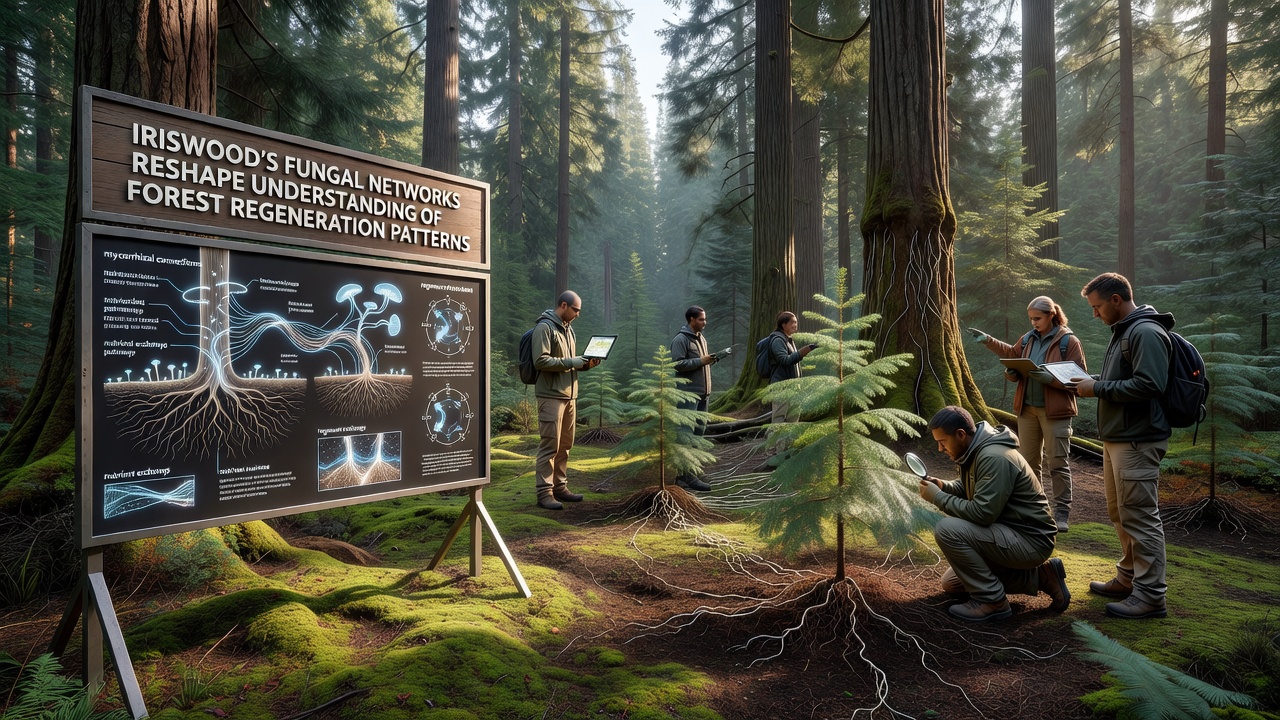
Scientists mapped these networks in Iriswood using soil core sampling combined with DNA sequencing, and the resulting diagrams revealed dense webs of fungal hyphae spanning several hectares. In plots where mature trees remained intact after selective harvesting, seedling survival rates reached higher percentages than in clear-cut zones where the networks had been disrupted. Data collected between 2022 and 2025 indicated that carbon transfer through fungal pathways accounted for up to 30 percent of the nitrogen received by new saplings in connected plots, according to measurements reported by the US Forest Service research stations.
Patterns of Regeneration After Disturbance
Regeneration surveys in Iriswood following a 2023 windstorm demonstrated that areas retaining older canopy trees experienced faster recolonization by shade-tolerant species such as hemlock and beech. The presence of intact fungal networks correlated with quicker root development in seedlings, while isolated patches showed delayed growth and higher mortality during summer droughts. Researchers noted that the networks appear to prioritize resource allocation toward genetically related or neighboring individuals, a finding that challenges earlier assumptions about uniform competition in forest stands.
September 2026 Field Data and Ongoing Monitoring
During September 2026, field teams returned to permanent monitoring plots in Iriswood to measure above-ground biomass accumulation and below-ground fungal activity. Soil moisture sensors paired with root imaging equipment recorded continued nutrient flow through hyphal connections even during periods of low rainfall, and these observations aligned with earlier greenhouse experiments that simulated drought conditions. The latest figures reveal that stands with preserved fungal networks maintained 18 percent higher soil organic carbon levels compared with sites where heavy equipment had compacted the topsoil and severed hyphae.
Management Implications for Local Forestry
Forest managers in Iriswood have adjusted harvesting guidelines to minimize soil disturbance in zones identified as critical network hubs, and these changes include narrower skid trails plus seasonal restrictions on heavy machinery. Similar practices have been tested in regions monitored by Natural Resources Canada, where reduced-impact logging preserved fungal connectivity and supported quicker canopy closure after harvest. Observers note that these adjustments require coordination between timber operators and ecologists to identify high-value network areas before operations begin.
Broader Scientific Context
Research teams have expanded sampling beyond Iriswood to compare fungal diversity across different forest types, and preliminary results suggest that mixed-species stands support more resilient networks than monocultures. Chemical analyses of root exudates indicate that certain tree species release compounds that stimulate fungal growth, thereby strengthening the overall network. These interactions contribute to the observed differences in regeneration speed and species composition documented in long-term study plots.
Conclusion
Continued monitoring in Iriswood will track how fungal networks respond to climate variability and changing management practices over the coming years. The accumulating evidence underscores the role these underground systems play in forest recovery, and the data collected so far provide a clearer picture of the mechanisms that sustain regeneration after natural and human disturbances.